
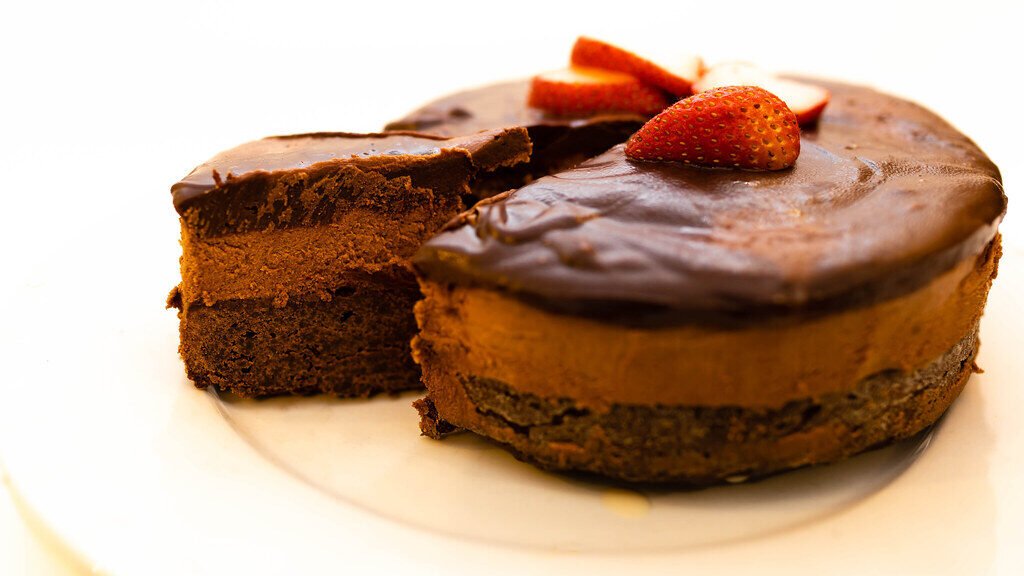
An eggless mousse cake gets its structure from whipped cream, setting chocolate and a vegetarian setting agent such as agar-agar or pectin, instead of eggs and gelatine. Build it on an eggless sponge, layer it in a ring, freeze it, and it slices as cleanly as any classic entremet.
Classic French mousse uses whipped eggs for airiness and gelatine to hold the shape. Both are a problem for vegetarian bakers. The good news is that pastry chefs have reliable swaps, and this guide explains each one simply.
Quick summary
- Whipped cream gives the air; melted chocolate sets the mousse as it cools.
- Agar-agar is a plant-based setting agent: start with about 1 g per 100 ml liquid and always boil it.
- Agar sets firmer than gelatine and sets at room temperature, so work quickly.
- Freeze the layered cake before unmoulding and glazing, especially in Indian heat.
Where mousse structure normally comes from
A mousse is a foam: lots of tiny air bubbles held in a creamy base. In a classic recipe, whipped egg whites or yolks hold the air, and gelatine (made from animal collagen) sets the whole thing so it can stand up in a cake. Take both away and you need something else to trap air and something else to set it.
For an eggless mousse cake, the jobs are split like this:
- Air: whipped cream (or aquafaba for a lighter, dairy-free mousse).
- Set: chocolate, agar-agar or pectin.
- Support: a sturdy base, freezing, and a ring or mould.
Whipped cream: the air in your mousse
Whip cream to soft peaks only, where the tip flops over. Stiff cream is hard to fold and makes the mousse grainy. Fold it gently into the base in two or three parts.
- Use a cream with enough fat to whip, ideally around 30–35% or more. Many cooking creams sold in India are lower in fat (often about 25%) and won’t whip well, so check the label.
- Non-dairy whipping cream, popular in Indian bakeries, whips easily and holds up well in heat. It tastes sweeter and less rich, so many chefs mix it with dairy cream.
- Chill the cream, bowl and whisk well before whipping.
Chocolate set: the easiest eggless mousse
Cocoa butter in chocolate is solid at fridge temperature, so chocolate mousse sets itself as it chills. A simple and reliable eggless chocolate mousse:
- Make a ganache: heat 100 g cream until steaming and pour over 150 g chopped dark chocolate. Rest 1 minute and stir smooth.
- Cool it to about 35–40°C, so it’s warm but not hot.
- Fold in 250–300 g softly whipped cream.
Dark chocolate sets firmest. Milk and white chocolate have less cocoa solids and set softer, so they often need a little agar or a higher chocolate ratio.
Agar-agar: the vegetarian setting agent
Agar-agar (often just called agar, or china grass in India) is made from seaweed, so it is suitable for vegetarians. It behaves differently from gelatine, and knowing the differences avoids rubbery mousse:
| Point | Agar-agar | Gelatine |
|---|---|---|
| Source | Seaweed (vegetarian) | Animal collagen |
| Activating | Must be boiled for 1–2 minutes | Bloomed in cold water, then melted gently; never boiled |
| Setting | Sets at room temperature, around 35–45°C, and quickly | Needs the fridge to set |
| Texture | Firmer and more brittle | Softer and wobbly |
| Heat | Stays set in warm weather | Softens and melts in heat |
How much to use: agar powder is strong, so start with about 1 g per 100 ml of liquid for a firm set, and use less for a softer mousse. Agar flakes and strands are weaker than powder, so follow the packet. Always do a small test set first.
How to use it in mousse: whisk agar into cold milk, fruit purée or cream, bring it to a boil, and simmer for 1–2 minutes. Mix it with your base, cool to just warm (about 40–45°C), then quickly fold in the whipped cream and pour into the mould. If it cools too much it sets in lumps before you finish. Very acidic fruits can weaken agar, so you may need a little more.
Chef’s tip: Too much agar gives a jelly-like, rubbery mousse. Start low. You can always add a pinch more next time, but you can’t fix a bouncy mousse after it sets.
Pectin for fruit layers
Pectin is a plant fibre found naturally in fruit, especially citrus peel and apples. It works best for fruit inserts, jellies and glazes rather than the airy mousse itself. Different pectins need different conditions: classic pectin needs lots of sugar and some acid, while NH pectin (a type pastry chefs use for glazes) sets with less sugar and can be melted again. Use the type your recipe names.
Building the eggless mousse cake
An entremet is a layered mousse cake. A simple layering plan:
- Base: a thin eggless sponge (curd or condensed milk sponge) or a crunchy biscuit and butter base. See our eggless cakes guide for sponge ideas.
- Insert: a fruit jelly or crémeux, set with agar or pectin and frozen in a smaller ring first.
- Mousse: pour half into a ring lined with acetate, press in the frozen insert, then top up with mousse.
- Finish: press the sponge on top (it becomes the bottom when flipped), smooth, and freeze.
Freezing and glazing
- Freeze the cake for at least 6 hours, ideally overnight, until solid. A frozen cake unmoulds with sharp edges.
- Unmould by warming the ring briefly with a hairdryer or warm cloth, then peel off the acetate.
- Glaze while frozen. Mirror glazes are usually set with gelatine, so choose a chocolate ganache glaze, a cocoa glaze, or an agar- or pectin-based glaze from a vegetarian recipe.
- Pour glaze at the temperature your recipe gives, usually warm, over the frozen cake on a rack. Let the excess drip, then move it to a board.
- Thaw in the fridge for 4–6 hours before serving. Agar sets can release a little liquid after freezing, so test your recipe once before a big order.
Tips for mousse cakes in Indian heat
- Work in an AC room, and keep cream and bowls chilled.
- Use agar or a chocolate-heavy mousse if the cake must travel. Agar holds better than whipped cream alone.
- Deliver cakes chilled in an insulated box, and tell customers to refrigerate on arrival.
- Avoid leaving a mousse cake out more than about 30 minutes on a hot day.
Love layered desserts? Explore more classic bakes on our tarts and torte page.
Frequently asked questions
How do you set a mousse cake without gelatine?
How much agar-agar should I use for mousse?
Does agar-agar need to be boiled?
Can I make mousse without eggs?
Can eggless mousse cakes be frozen?
How do I stop my mousse cake melting in hot weather?
Create eggless entremets like a pastry chef
Learn mousse, inserts, glazes and eggless sponges with chef-led online lessons.
Explore the Eggless Pastry ProgramRead next
Get new baking guides in your inbox
Trending recipes, chef techniques and course offers — free, no spam.
Subscribe free